🤔 What do you consider “vibe coding”?
Originally published on LinkedIn
🤔 𝗪𝗵𝗮𝘁 𝗱𝗼 𝘆𝗼𝘂 𝗰𝗼𝗻𝘀𝗶𝗱𝗲𝗿 “𝘃𝗶𝗯𝗲 𝗰𝗼𝗱𝗶𝗻𝗴”?
“Vibe coding” when originally coined was meant to mean non-technical people building software with AI, with little concern or no care about code, architecture, implementation details, or code quality.
That definition for me is too narrow and creates an unnecessary divide between “technical” and “non-technical” people and can hide problems with AI.
Engineers often criticise vibe coding because the generated code can be fragile or unmaintainable, I'd argue engineers can generate as bad.
If an engineer is throwing prompts at AI without structure, review, or direction… is that really different?
To me, the distinction isn’t technical vs non-technical.
𝗜𝘁’𝘀 𝗽𝗹𝗮𝗻𝗻𝗶𝗻𝗴.
My definition of vibe coding is:
➡️ 𝗚𝗲𝗻𝗲𝗿𝗮𝘁𝗶𝗻𝗴 𝗰𝗼𝗱𝗲 𝘄𝗶𝘁𝗵 𝗶𝗻𝘁𝗲𝗻𝘁, 𝘄𝗶𝘁𝗵𝗼𝘂𝘁 𝗮 𝗰𝗹𝗲𝗮𝗿 𝗽𝗹𝗮𝗻 𝗼𝗳 𝗵𝗼𝘄 𝘁𝗼 𝗮𝗰𝗵𝗶𝗲𝘃𝗲 𝗶𝘁.
That intent can still be detailed: • Features • User experience • Performance goals • Architecture constraints • Testing requirements • Scalability concerns
But the implementation path is discovered dynamically through AI interaction rather than fully designed upfront. I enjoy it and use this mode as well as planned and spec based approaches, and I'm an engineer, but I would say I "vibe coded" it as followed my engineering instincts more than a plan.
That’s why I think both non-engineers and experienced engineers can absolutely be vibe coding.
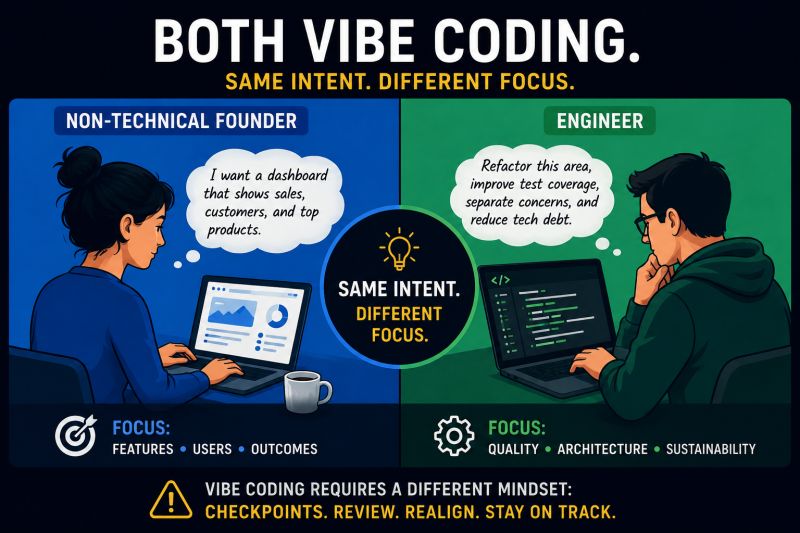
A founder might say: 💬 “I want a dashboard that does X, Y, and Z.”
An engineer might say: 💬 “Refactor this area, improve test coverage, separate concerns, and reduce technical debt.”
In both cases, the intent is clear.
In both cases getting there is figured out by AI, you start at a prompt, not design, the danger of the output drifting through random iteration is exactly the same.
𝗧𝗵𝗮𝘁’𝘀 𝘄𝗵𝘆 𝘃𝗶𝗯𝗲 𝗰𝗼𝗱𝗶𝗻𝗴 𝗿𝗲𝗾𝘂𝗶𝗿𝗲𝘀 𝗮 𝗱𝗶𝗳𝗳𝗲𝗿𝗲𝗻𝘁 𝗺𝗶𝗻𝗱𝘀𝗲𝘁.
You need checkpoints. You need to review constantly. You need to know when to revert code, recognise dead ends, and stop chasing ideas that only appeared during iteration.
Because AI is excellent at maintaining momentum.
⚠️ That does not mean it is moving in the right direction. As an architect I use direction alot and I know that those decisons are backed by a longer term plan and goal.
My biggest concern is that people assume: “An engineer produced it, so it must be engineered properly.”
That’s simply not true.
We’re already seeing huge amounts of poor-quality AI-generated code entering production systems, from engineers and non-engineers alike, because of weak planning, weak review, and too much trust in iterative AI output.
So it's critical to know when you are winging it and "vibing" especially as an engineer.
𝗪𝗵𝗮𝘁 𝗱𝗼 𝘆𝗼𝘂 𝗰𝗼𝗻𝘀𝗶𝗱𝗲𝗿 𝘃𝗶𝗯𝗲 𝗰𝗼𝗱𝗶𝗻𝗴?
#AI #SoftwareEngineering #VibeCoding #ArtificialIntelligence #Programming #TechLeadership #Architecture #Developer #Coding #TechDiscussion