🧠 In a world where features are copied almost instantly by AI, speed alone is no longer a competitive advantage, neither is even having good ideas.
Originally published on LinkedIn
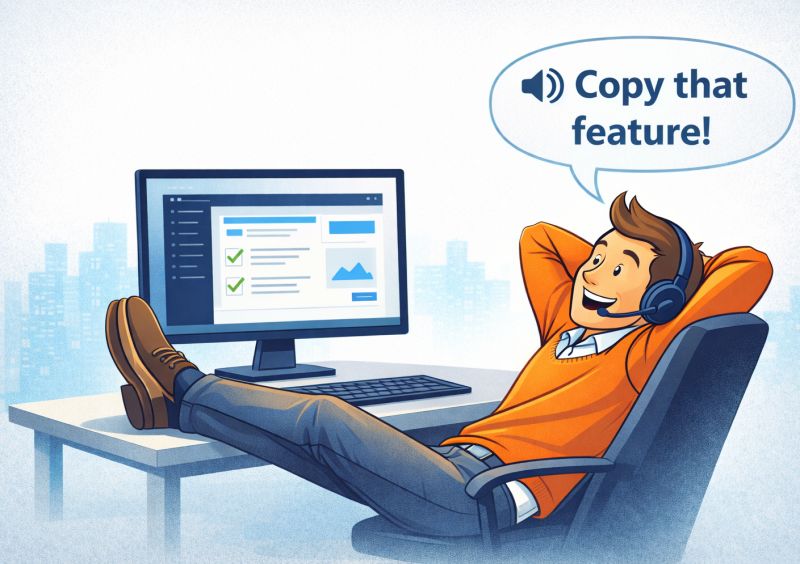
🧠 In a world where features are copied almost instantly by AI, speed alone is no longer a competitive advantage, neither is even having good ideas.
So what do you do? 🤔
You change what you compete on.
✨From 𝗶𝗱𝗲𝗮𝘀 𝘁𝗼 𝗲𝘅𝗲𝗰𝘂𝘁𝗶𝗼𝗻.
✨From 𝗳𝗲𝗮𝘁𝘂𝗿𝗲𝘀 𝘁𝗼 𝘀𝘆𝘀𝘁𝗲𝗺𝘀.
✨From 𝘀𝗽𝗲𝗲𝗱 𝘁𝗼 𝗲𝘅𝘁𝗲𝗻𝘀𝗶𝗯𝗶𝗹𝗶𝘁𝘆.
Because while AI can replicate functionality, it struggles to replicate maturity.
Anyone can generate a recommendation engine.
"Not everyone can make it fast, scalable, observable, and affordable to run under real traffic." 🚀
Anyone can ship a feature. "Very few can operate it reliably for years with little maintenance." 🛠️
This is where competitive advantage quietly relocates to what Engineers have been saying for along time.
✅ how your system behaves under load
✅ how quickly you recover from failure
✅ how much it costs to serve each customer
✅ how safely you handle data
✅ how confidently you can evolve the platform
.. as long as engineers give up manual coding, embrace AI to build fast, and use their engineering skills to build right.
These are not engineering luxuries. They are business survival traits.
When features are cheap and good ideas copied quicker, the hard part is making them work at scale and lasting. Organizations need to rethink product development.
Because copying the interface is easy. Copying the operational reality is not.
Your competitors can reproduce what your customers see. They cannot easily reproduce: ✨ your architecture decisions ✨ your data pipelines ✨ your failure handling ✨ your cost structure
That’s where differentiation now lives.
There’s a tension here that both product teams and engineers recognize.
Product teams want velocity.
🚀 Engineers want sustainability.
🛠️
AI gives it all, but both sides need to adapt, don't expect apps to come out with a single vague prompt, and don't expect to compete manually coding against AI builds.
Skilled business focused engineers empowered by AI capable of working with businesses ideas not handed requirements win, and already are.
It makes engineering quality visible as strategy.
For leaders, this shift is uncomfortable. Because it changes where investment really matters.
If features and ideas are no longer scarce, then this is: ✨ system design ✨ operational excellence ✨ engineering judgment ✨ long-term maintainability
These become strategic assets, not technical nice-to-haves.
You don’t win by being first anymore. You win by being technically hard to replace.
So what do you do in practice?
You treat non-functional requirements as first-class product features: 📌 𝗿𝗲𝗹𝗶𝗮𝗯𝗶𝗹𝗶𝘁𝘆 𝗶𝘀 𝗮 𝗳𝗲𝗮𝘁𝘂𝗿𝗲 📌 𝗽𝗲𝗿𝗳𝗼𝗿𝗺𝗮𝗻𝗰𝗲 𝗶𝘀 𝗮 𝗳𝗲𝗮𝘁𝘂𝗿𝗲 📌 𝗰𝗼𝘀𝘁 𝗲𝗳𝗳𝗶𝗰𝗶𝗲𝗻𝗰𝘆 𝗶𝘀 𝗮 𝗳𝗲𝗮𝘁𝘂𝗿𝗲 📌 𝘀𝗲𝗰𝘂𝗿𝗶𝘁𝘆 𝗶𝘀 𝗮 𝗳𝗲𝗮𝘁𝘂𝗿𝗲
You stop measuring success by delivery speed, it's tending towards zero, so irrelevant.
You start measuring it by how well your system holds up over time.