“I’m sorry. You were right. That’s what I should have done. I’ll fix the problem.”
Originally published on LinkedIn
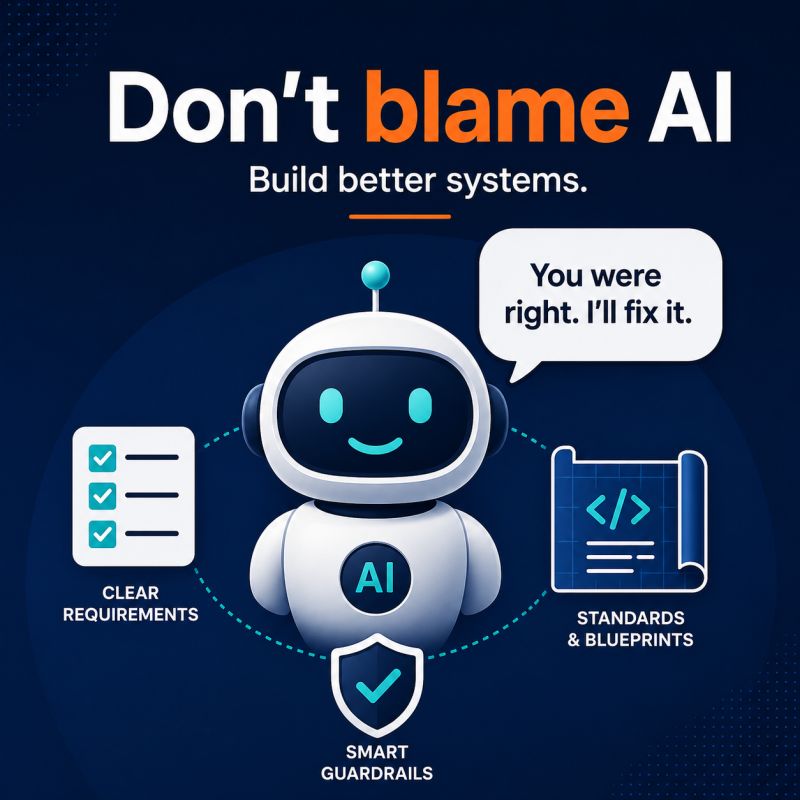
“𝗜’𝗺 𝘀𝗼𝗿𝗿𝘆. 𝗬𝗼𝘂 𝘄𝗲𝗿𝗲 𝗿𝗶𝗴𝗵𝘁. 𝗧𝗵𝗮𝘁’𝘀 𝘄𝗵𝗮𝘁 𝗜 𝘀𝗵𝗼𝘂𝗹𝗱 𝗵𝗮𝘃𝗲 𝗱𝗼𝗻𝗲. 𝗜’𝗹𝗹 𝗳𝗶𝘅 𝘁𝗵𝗲 𝗽𝗿𝗼𝗯𝗹𝗲𝗺.”
A familiar response from AI.
And usually the cue for another flaming post:
🔥 “AI can’t code.”
🔥 “AI is rubbish.”
🔥 “Look how badly it cocked this up.”
But blaming AI is easy.
AI makes mistakes. Engineers make mistakes.
And, to be honest, the person at the helm makes mistakes too.
You asked it to do something.
It did its best with the information, experience and guidance available.
It may have done what you asked, but not the way you wanted.
So ask yourself:
🔹 Did you actually explain how you wanted it done?
🔹 Did you define the design?
🔹 Did you provide coding standards?
🔹 Did you document the thing that was obvious in your head, but invisible to everyone else?
👉 𝗗𝗶𝗱 𝗜 𝘀𝗲𝘁 𝗺𝘆 𝘁𝗲𝗮𝗺 𝘂𝗽 𝗳𝗼𝗿 𝘀𝘂𝗰𝗰𝗲𝘀𝘀?
When an agent gets something wrong, don’t just accept its apology and move on.
Use the failure to improve yourself and your process.
📌 Problem X should be solved with Y.
📌 This is our standard.
📌 These are the constraints.
📌 This is how we do things here.
Then:
📝 Build the documentation.
🛠️ Build the guardrails.
🚧 Put the safety rails in place.
Work with your agents as you would work with a team.
You wouldn’t, or at least shouldn’t, go crazy at a junior engineer who was trying to do their best with incomplete guidance.
You would identify what they were missing and help them succeed next time.
✅ Good management still matters.
✅ Good leadership still matters.
✅ Good engineering practices still matter.
AI isn’t an excuse to abandon them.
It makes them even more important.
𝗧𝗵𝗲𝗿𝗲 𝗮𝗿𝗲𝗻’𝘁 𝗯𝗮𝗱 𝗮𝗴𝗲𝗻𝘁𝘀. 𝗧𝗵𝗲𝗿𝗲 𝗮𝗿𝗲𝗻’𝘁 𝗯𝗮𝗱 𝗲𝗻𝗴𝗶𝗻𝗲𝗲𝗿𝘀. (but we are human 🤣)
There are agents and engineers who haven’t been given what they need to succeed.
𝗔𝗻𝗱 𝘁𝗵𝗮𝘁’𝘀 𝗮 𝗹𝗲𝗮𝗱𝗲𝗿𝘀𝗵𝗶𝗽 𝗽𝗿𝗼𝗯𝗹𝗲𝗺.
#ArtificialIntelligence #AIAgents #EngineeringLeadership #SoftwareEngineering #TechLeadership