🚀 I’m an Engineer.
Originally published on LinkedIn
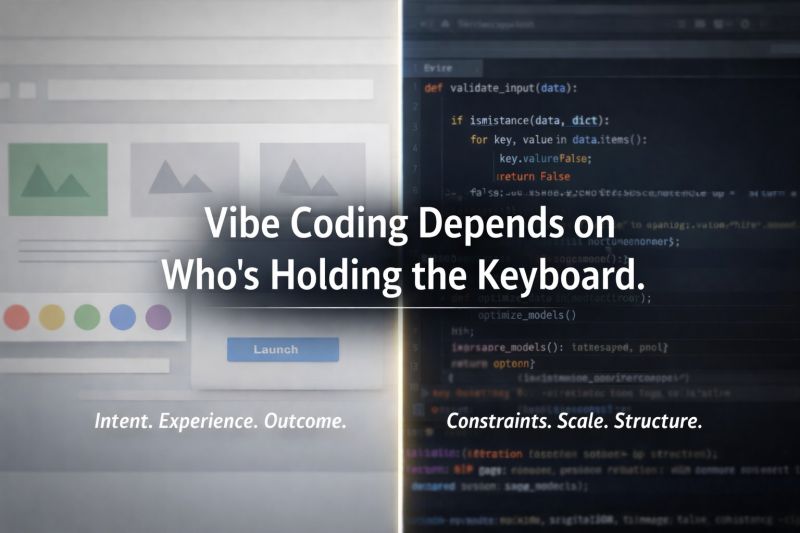
🚀 𝗜’𝗺 𝗮𝗻 𝗘𝗻𝗴𝗶𝗻𝗲𝗲𝗿. 𝗔𝗻𝗱 𝗜 𝗟𝗼𝘃𝗲 𝗩𝗶𝗯𝗲 𝗖𝗼𝗱𝗶𝗻𝗴. Vibe coding is often described as a doomsday event for a codebase, usually by engineers talking about non-technical people vibe coding, often without engaging with what vibe coding actually means.
There’s a lot of knee-jerk reaction in that conversation.
Here’s the part people don’t expect: I love vibe coding for the same reason non-technical people do.
🔹 I don’t want to spend weeks writing perfect requirements.
🔹 I don’t want to break something into imaginary tasks and delegate work that may or may not move us forward.
🔹 I know what I want to achieve.
🔹 I just want to move toward it.
Just like a business person wants to get their feature right, I want to get the technical and non functional structure right.
So when we talk about vibe coding, downplaying its value, the question is:
🔥 𝗪𝗵𝗼 𝗶𝘀 𝗱𝗼𝗶𝗻𝗴 𝘁𝗵𝗲 𝘃𝗶𝗯𝗲 𝗰𝗼𝗱𝗶𝗻𝗴, 𝘁𝗼 𝗮𝗰𝗵𝗶𝗲𝘃𝗲 𝘄𝗵𝗮𝘁, 𝗮𝗻𝗱 𝗶𝗻 𝘄𝗵𝗮𝘁 𝗰𝗼𝗻𝘁𝗲𝘅𝘁? A non-technical stakeholder might say:
“Make it feel premium.” “That page feels really clunky” “Can we change that from a table to something with better UX?”
They understand the business goal better than we do.
An engineer might say:
“This boundary feels wrong.” “The controller has too much business logic.” “This isn’t going to scale.”
We understand constraints, trade-offs, coupling, performance, long-term maintainability.
Both are iterating toward an outcome that they just can’t fully define the path upfront. That’s vibe coding, iterating toward what you want without being able to define every step in advance. AI simply accelerates that exploration, whether the change is functional or non-functional.
When an experienced engineer or architect vibe codes a refactor or core technical change, it is often far more efficient than pretending we can perfectly plan it upfront.
The business doesn’t care about the ticket breakdown, just it does what you promised would be the non functional outcome
And large technical refactors?
🔹 The tickets are imaginary.
🔹 The timelines are fiction.
🔹 The breakdowns are guesses.
🔹 Too many unknowns.
That’s why these initiatives become giant, unloved items that drag on, lose energy, and often stall halfway.
🧠 𝗜𝗻𝗳𝗼𝗿𝗺𝗲𝗱 𝘃𝗶𝗯𝗲 𝗰𝗼𝗱𝗶𝗻𝗴 is different. In my opinion, the best vibe coders understand both product and engineering goals.
If that’s not one person — pair them.
Let a product person say: “I want a large list of items displayed, and I want it to feel instant.”
Let an engineer immediately finish the sentence: “…and we’ll page it in SQL, not in memory, so it doesn’t fall over at scale.”
That’s powerful, that’s where intent meets constraint.
The fastest path to a better system isn’t more planning, it’s tighter feedback loops, it’s exploring safely instead of estimating fiction.
I’m an engineer, and I love vibe coding.
#SoftwareEngineering #Architecture #AI #ProductDevelopment #TechLeadership