Engineers, AI Just Killed Your Best Excuse for Leaving Bugs in the Backlog. Now What?
Originally published on LinkedIn
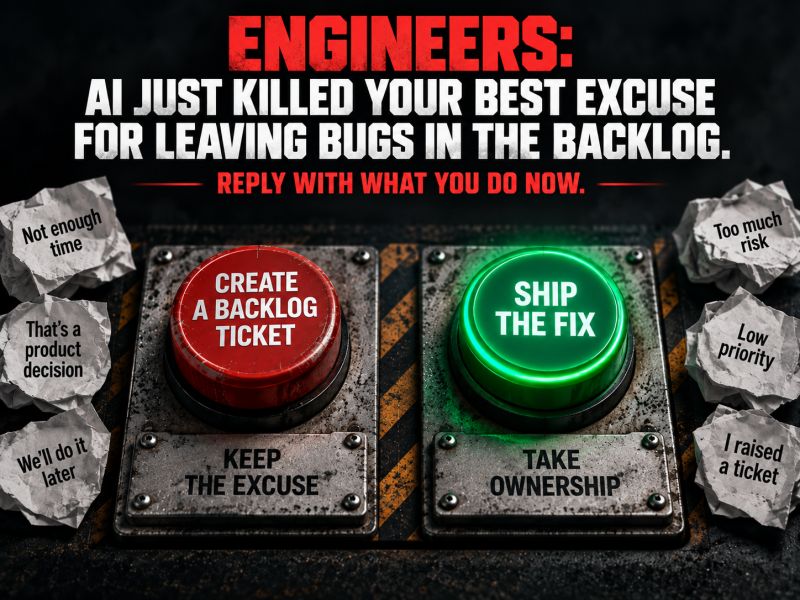
𝗘𝗻𝗴𝗶𝗻𝗲𝗲𝗿𝘀, 𝗔𝗜 𝗝𝘂𝘀𝘁 𝗞𝗶𝗹𝗹𝗲𝗱 𝗬𝗼𝘂𝗿 𝗕𝗲𝘀𝘁 𝗘𝘅𝗰𝘂𝘀𝗲 𝗳𝗼𝗿 𝗟𝗲𝗮𝘃𝗶𝗻𝗴 𝗕𝘂𝗴𝘀 𝗶𝗻 𝘁𝗵𝗲 𝗕𝗮𝗰𝗸𝗹𝗼𝗴. 𝗡𝗼𝘄 𝗪𝗵𝗮𝘁?
For decades, engineering has divided responsibility. - Support owns support issues. - Product teams build features. - Platform and Ops own infrastructure and keeps things running.
A lot of that separation wasn’t because it was the best model, it was because of capacity.
𝗜𝗺𝗽𝗹𝗲𝗺𝗲𝗻𝘁𝗮𝘁𝗶𝗼𝗻 𝘁𝗼𝗼𝗸 𝘁𝗶𝗺𝗲. And by implementation, I don’t just mean writing code. I mean implementing it, testing it, understanding the impact, and getting it safely into production.
𝗔𝗜 𝗰𝗵𝗮𝗻𝗴𝗲𝘀 𝘁𝗵𝗮𝘁 𝗲𝗾𝘂𝗮𝘁𝗶𝗼𝗻. Imagine you’re on a support call. There’s a production bug in front of you. You find the problem and fix it. Then you realise the same issue exists in 10, 20, maybe 100 other places in the system. Historically, a good engineer would recognise that and probably stop at the immediate fix.
Why?
Because fixing every occurrence, validating the change and releasing it safely could be a significant piece of work and risk and there's a need now for a fix.
So you fix the incident and create a backlog item.
Maybe it gets prioritised.. Maybe it becomes “tech debt.”.. Maybe nobody ever touches it again. Job done?
What made sense when implementation was expensive isn't true now when AI can generate the broader fix and have a PR in front of you in 10 minutes?
𝗧𝗵𝗮𝘁 𝗲𝘅𝗰𝘂𝘀𝗲 𝗵𝗮𝘀 𝗹𝗮𝗿𝗴𝗲𝗹𝘆 𝗱𝗶𝘀𝗮𝗽𝗽𝗲𝗮𝗿𝗲𝗱. 🔥 For the hotfix, same as before, keep the blast radius small. Restore service. Don’t turn an incident into an uncontrolled refactor.
⚡ After the incident. Now the harder question starts, you have the broader fix sitting in front of you. “Put it in the backlog” should no longer be the automatic answer.
🧠 𝗧𝗵𝗲 𝗲𝗻𝗴𝗶𝗻𝗲𝗲𝗿𝗶𝗻𝗴 𝘄𝗼𝗿𝗸 𝗵𝗮𝘀 𝗺𝗼𝘃𝗲𝗱. The hard part isn’t typing the code anymore. It’s deciding: 👉 What is the risk? 👉 What is the scope? 👉 What tests and coverage do we have? 👉 What could this change break? 👉 Can we release it incrementally? 👉 What does it do to the delivery timeline? 👉 How do we get it safely into production?
This is where I want to push engineers. “𝗜 𝗿𝗮𝗶𝘀𝗲𝗱 𝗮 𝘁𝗶𝗰𝗸𝗲𝘁” is not the same as taking responsibility. “𝗧𝗵𝗮𝘁’𝘀 𝗮 𝗽𝗿𝗼𝗱𝘂𝗰𝘁 𝗱𝗲𝗰𝗶𝘀𝗶𝗼𝗻” is not good enough either.
You’re the engineer closest to the problem. You understand the failure mode and the system and you already have the fix.
If the implementation cost has collapsed, but your behaviour hasn’t changed, then AI isn’t your bottleneck..
𝗬𝗼𝘂𝗿 𝗽𝗿𝗼𝗰𝗲𝘀𝘀 𝗶𝘀.
AI hasn’t removed engineering responsibility. It removed one of the biggest reasons we historically deferred it. You are responsible for the quality.
So if you know the bug exists elsewhere, the fix is already sitting in front of you, what do you do?
𝗔𝗜 𝗷𝘂𝘀𝘁 𝗸𝗶𝗹𝗹𝗲𝗱 𝘆𝗼𝘂𝗿 𝗯𝗲𝘀𝘁 𝗲𝘅𝗰𝘂𝘀𝗲. 𝗥𝗲𝗽𝗹𝘆 𝘄𝗶𝘁𝗵 𝘄𝗵𝗮𝘁 𝘆𝗼𝘂 𝗱𝗼 𝗻𝗼𝘄..