Engineers' accountability when building with AI
Originally published on LinkedIn
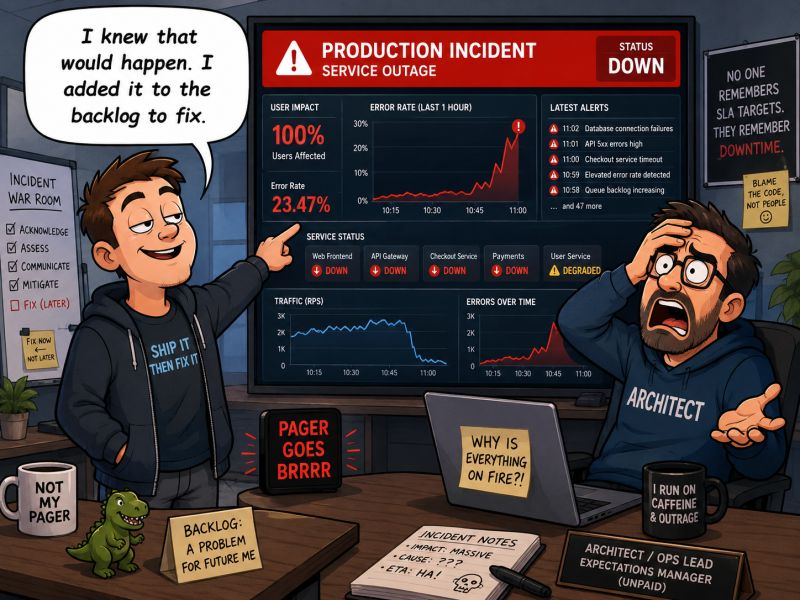
𝗘𝗻𝗴𝗶𝗻𝗲𝗲𝗿𝘀' 𝗮𝗰𝗰𝗼𝘂𝗻𝘁𝗮𝗯𝗶𝗹𝗶𝘁𝘆 𝘄𝗵𝗲𝗻 𝗯𝘂𝗶𝗹𝗱𝗶𝗻𝗴 𝘄𝗶𝘁𝗵 𝗔𝗜 I started writing an article about engineering accountability then ranted instead😡
It was going to be about technical debt, backlogs, habits of documenting problems rather than fixing them which is now false economy. Then it turned into a rant.
I prefer the rant so here it is.. I have a trigger.
🚨 I'm in the middle of a production incident. The site's down. Customers are calling. The business wants answers now.
Then an engineer says:
“We knew about that issue. There's a backlog item for it.”
*$£%"@*! No.
What you've just told me is that you knew this could cause a production incident. You investigated it. You understood it. You wrote a ticket..
Maybe even a beautiful Confluence page describing how it could fail.
And then… you stopped.
Maybe someone else made the call to ship. Product, delivery, whoever, technically, you're covered. 📋 You documented it. 📋 You raised the risk. 📋 You created the backlog item.
You can point at it and say: “I knew this would happen.” Again Hell no!
I don't want a blame culture. People make mistakes. Systems fail. Good teams learn from that.
But a 𝗻𝗼-𝗯𝗹𝗮𝗺𝗲 culture is very different from a 𝗻𝗼-𝗮𝗰𝗰𝗼𝘂𝗻𝘁𝗮𝗯𝗶𝗹𝗶𝘁𝘆 culture.
When production is down and everyone's response is essentially, “I did my part” something is very wrong as there must have been a mistake down the line somewhere.
And now AI raises the bar.
Engineers increasingly say 𝗶𝗺𝗽𝗹𝗲𝗺𝗲𝗻𝘁𝗮𝘁𝗶𝗼𝗻 𝗶𝘀 𝗰𝗵𝗲𝗮𝗽. The difficult work is the thinking. The architecture. The design. Understanding the problem and making the right trade-offs.
Fine.
But if you've already done that thinking, understood the failure mode, documented the solution and written the backlog item…
Why didn't you change it!?!
At some point, a backlog item stops being engineering work and starts becoming a disclaimer “I spotted this, so it isn't on me.” Someone else made a decision.
I didn't like that before AI. With AI, my tolerance for it is much lower. We used to hear:
⚠️ “We had to get it out.” ⚠️ “There was too much delivery pressure.” ⚠️ “We didn't have time to do it properly.” ⚠️ “The fix would have taken too long.”
Sometimes those were legitimate trade-offs. But if AI has changed the economics of implementation, we have to be consistent about what that means.
You don't get to celebrate 10x productivity for feature delivery and then rediscover the old cost of implementation when it's time to fix resilience, observability, security, testing or technical debt.
𝗞𝗻𝗼𝘄𝗶𝗻𝗴 about a problem isn't owning it. 𝗗𝗼𝗰𝘂𝗺𝗲𝗻𝘁𝗶𝗻𝗴 a risk isn't engineering it out. 𝗪𝗿𝗶𝘁𝗶𝗻𝗴 a ticket isn't fixing it.
“I told you so” is not an engineering outcome.
🤖 AI isn't reducing engineers' accountability. It's increasing it.
#EngineeringLeadership #SoftwareEngineering #AIEngineering #TechnicalDebt #DevOps #EngineeringCulture