🤖 AI can change how Product and Engineering collaborate.
Originally published on LinkedIn
🤖 𝗔𝗜 𝗰𝗮𝗻 𝗰𝗵𝗮𝗻𝗴𝗲 𝗵𝗼𝘄 𝗣𝗿𝗼𝗱𝘂𝗰𝘁 𝗮𝗻𝗱 𝗘𝗻𝗴𝗶𝗻𝗲𝗲𝗿𝗶𝗻𝗴 𝗰𝗼𝗹𝗹𝗮𝗯𝗼𝗿𝗮𝘁𝗲. I don’t know what we call this yet — but it’s working for me.
I’ve been experimenting with a new workflow — one that doesn’t start with a ticket, but with a business goal and technical reality together early. Using AI, rapid prototyping, and engineering intuition, I propose engineering solutions to business goals with working code they can see, not a ticket for an idea and requirements.
We all know the traditional flow: 👉 𝗴𝗼𝗮𝗹 (𝗽𝗿𝗼𝗱𝘂𝗰𝘁) → 𝗶𝗱𝗲𝗮 (𝗽𝗿𝗼𝗱𝘂𝗰𝘁) → 𝘁𝗶𝗰𝗸𝗲𝘁 (𝗽𝗿𝗼𝗱𝘂𝗰𝘁) → 𝗿𝗲𝗳𝗶𝗻𝗲 (𝗲𝗻𝗴+𝗽𝗿𝗼𝗱𝘂𝗰𝘁) → 𝗽𝗹𝗮𝗻 (𝗲𝗻𝗴) → 𝗯𝘂𝗶𝗹𝗱 (𝗲𝗻𝗴) → 𝗶𝘁𝗲𝗿𝗮𝘁𝗲 𝗰𝗼𝗺𝗽𝗹𝗲𝘁𝗲𝗱 𝘃𝗲𝗿𝘀𝗶𝗼𝗻 (𝗲𝗻𝗴+𝗽𝗿𝗼𝗱𝘂𝗰𝘁) → 𝗿𝗲𝗹𝗲𝗮𝘀𝗲
📝 What usually happens: • Engineering joins too late, after the idea and ticket exist. • Product returns too late, after the build. • The middle is a handover gap — engineers build, product waits to see anything real for the first time. • That’s where friction starts: product has solutionized, the business has committed, and engineering faces reality mid-build. • Everyone’s frustrated. Timelines slip. We loop back. Time lost.
Here’s the new flow I’ve been testing:
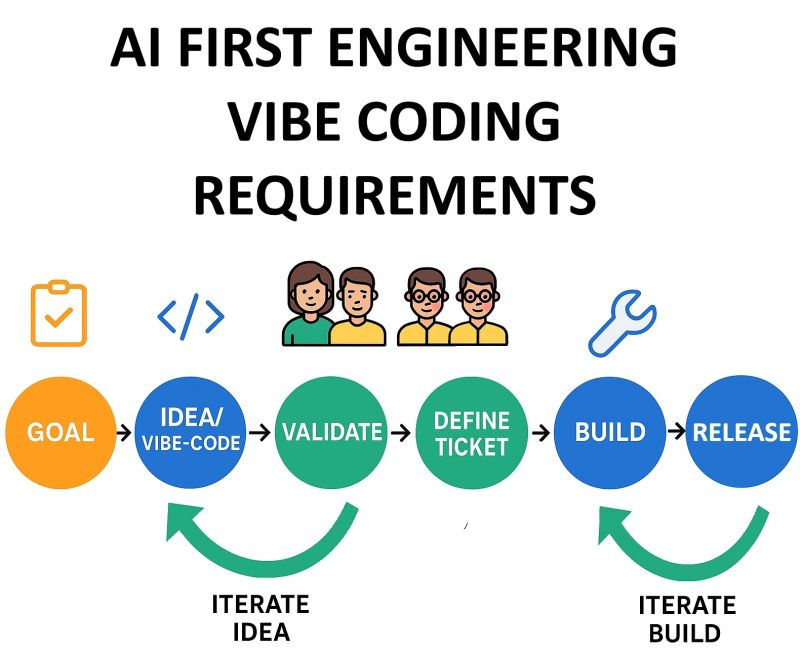
👉 𝗴𝗼𝗮𝗹 (𝗽𝗿𝗼𝗱𝘂𝗰𝘁) → 𝗶𝗱𝗲𝗮 / 𝘃𝗶𝗯𝗲-𝗰𝗼𝗱𝗲 (𝗲𝗻𝗴) → 𝘃𝗮𝗹𝗶𝗱𝗮𝘁𝗲 (𝗲𝗻𝗴+𝗽𝗿𝗼𝗱𝘂𝗰𝘁) → 𝗶𝘁𝗲𝗿𝗮𝘁𝗲 𝗶𝗱𝗲𝗮 (𝗲𝗻𝗴+𝗽𝗿𝗼𝗱𝘂𝗰𝘁) → 𝗱𝗲𝗳𝗶𝗻𝗲 𝘁𝗶𝗰𝗸𝗲𝘁 (𝗲𝗻𝗴+𝗽𝗿𝗼𝗱𝘂𝗰𝘁) → 𝗯𝘂𝗶𝗹𝗱 (𝗲𝗻𝗴) → 𝗿𝗲𝗹𝗲𝗮𝘀𝗲
📝 What’s different: • Product defines the goal. Engineering explores what’s possible — and they meet immediately.
• The ticket appears after POC code, once direction is agreed. No wasted planning on ideas that won’t survive.
• By then, we know what’s feasible, achievable, and roughly how long it’ll take — cutting downstream failure.
• The iteration happens early — between idea, validation, and refinement — powered by AI. What once needed major investment (time, design, development) now happens in minutes.
With AI, the biggest learning now happens at the idea and validation stage, not weeks later at build time.
Once we hit build, we still iterate — but the loops are smaller, faster, and grounded in validated requirements.
⚙️ In practice: 1️⃣ Start from a business goal — not a solution. 2️⃣ Use AI to vibe-code technical options. 3️⃣ Share a quick demo or screenshot — no ticket yet. 4️⃣ Validate: “Yes, that would solve my goal.” 5️⃣ Feed the discussion into AI → generate requirements. 6️⃣ Build and release in short cycles — fast, grounded, aligned.
This brings engineering upstream, turns developers into co-designers, and shortens the gap between idea and impact.
It won’t fit every project — but for open-ended goals and discovery work, it’s been incredibly effective.
👇 What should we call it?
#AIEngineering #ProductDevelopment #RapidPrototyping #Innovation #AITools #EngineeringCulture #FailFast #TechLeadership