🚀 5–10× acceleration for an AI-first engineer isn’t hype — what happens when you run an honest race.
Originally published on LinkedIn
🚀 𝟱–𝟭𝟬× 𝗮𝗰𝗰𝗲𝗹𝗲𝗿𝗮𝘁𝗶𝗼𝗻 𝗳𝗼𝗿 𝗮𝗻 𝗔𝗜-𝗳𝗶𝗿𝘀𝘁 𝗲𝗻𝗴𝗶𝗻𝗲𝗲𝗿 𝗶𝘀𝗻’𝘁 𝗵𝘆𝗽𝗲 — 𝘄𝗵𝗮𝘁 𝗵𝗮𝗽𝗽𝗲𝗻𝘀 𝘄𝗵𝗲𝗻 𝘆𝗼𝘂 𝗿𝘂𝗻 𝗮𝗻 𝗵𝗼𝗻𝗲𝘀𝘁 𝗿𝗮𝗰𝗲.
People dismiss claims like this, so I set up a simple comparison:
One senior engineer using AI-first practices vs the same senior inside a typical 4-person team (1 senior, 2 mids, 1 junior).
Same engineer. Same work. Only the delivery model changes.
Maths time, four senior engineers 𝘁𝗵𝗲𝗼𝗿𝗲𝘁𝗶𝗰𝗮𝗹𝗹𝘆 could deliver 𝟰 units (one per senior-level engineer), assuming zero meetings, zero PRs, zero mentoring, zero dependencies — conditions that simply never exist.
Once you account for the unavoidable drag — where the senior spends more time managing inefficiency than doing what they’re great at (delivering) — the picture becomes clear:
❌ ceremonies, refinement, planning
❌ PR queues and rewrite cycles
❌ mentoring + onboarding
❌ constant context switching
❌ alignment and communication drag
❌ bureaucracy and process overhead
Traditional teams, without all 4 seniors, realistically deliver 2–3 units, averaging ~2.5 units. Many times I'd question 2.
Now compare an 𝐀𝐈-𝐟𝐢𝐫𝐬𝐭 𝐬𝐞𝐧𝐢𝐨𝐫, whose only focus is delivering business value:
➕ AI replaces senior/mid/junior execution
➕ mentoring overhead disappears
➕ iteration cycles shrink from days to hours or minutes
➕ no ceremonies, PR bottlenecks, or delegation delays
➕ large tasks compress dramatically
➕ parallelisation becomes free
➕ context switching collapses
➕ deep flow becomes the default
The result?
👉 ~2.5 units baseline — instantly matching the entire traditional team
👉 ~4–5 units once latency collapses, new ways of working emerge, and process becomes much lighter
👉 𝟱–𝟭𝟬× with mature AI-first workflows, parallelisation, and agents
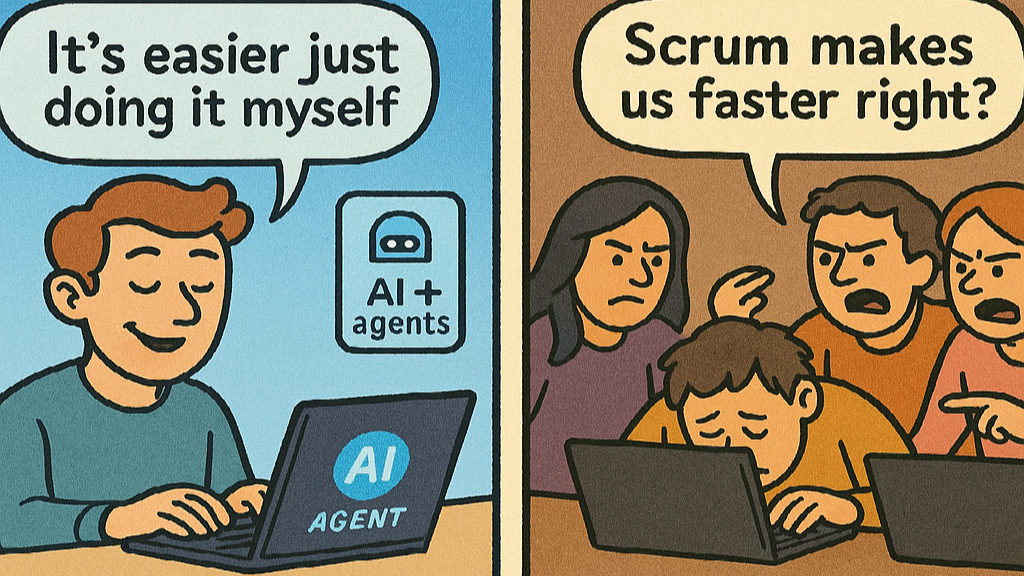
This also explains a sentiment most senior engineers have quietly held for years:
“𝐈𝐭 𝐰𝐨𝐮𝐥𝐝 𝐛𝐞 𝐟𝐚𝐬𝐭𝐞𝐫 𝐢𝐟 𝐈 𝐣𝐮𝐬𝐭 𝐝𝐢𝐝 𝐢𝐭 𝐦𝐲𝐬𝐞𝐥𝐟.”
With AI-first engineering, that becomes mathematically true.
I know a lot of engineers have only ever worked inside this traditional model — it’s the only engineering they’ve known.
Before the questions, a small caveat:
Even though I did the maths, a lot of the ratios, assumptions, and unit sizes can be debated — and they’ll vary with the senior’s skill level and the maturity of the AI-first workflow. My goal wasn’t a perfect formula, but to highlight the real pluses and minuses in delivery speed when you compare these two models.
But please — dissect my maths. I’d genuinely love feedback.
❓ Did I model the traditional team incorrectly?
❓ Have I underestimated or overestimated AI?
❓ Does the maths surprise you, or does it match your lived experience?
Full article with detailed maths is linked — let’s discuss. https://lnkd.in/emjs6TCA
#AI #ArtificialIntelligence #EngineeringProductivity #SoftwareEngineering #AIFirst #SoftwareDelivery #DevTeam #TechLeadership #FutureOfWork #10xEngineer