🤖 100% AI Code Generation: Why Engineering Practices Matter More Than Ever 🤖
Originally published on LinkedIn
🤖 100% AI Code Generation: Why Engineering Practices Matter More Than Ever 🤖
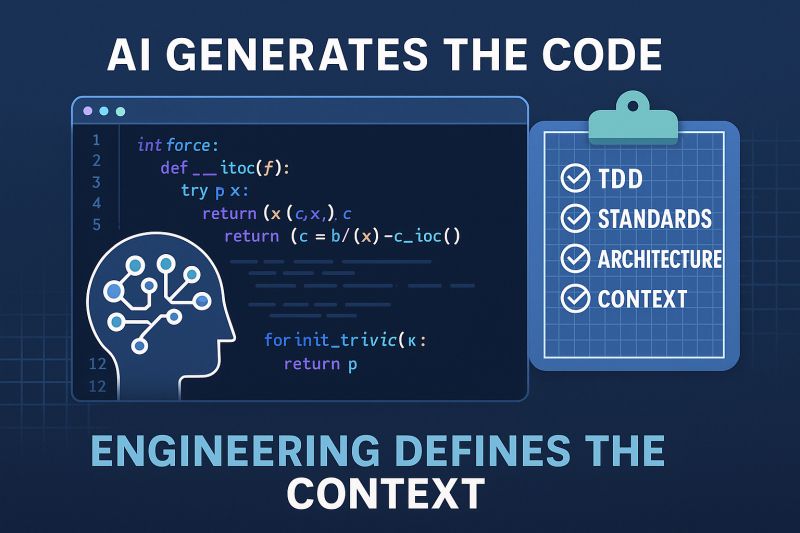
There’s almost no reason for an engineer to manually code anymore. I say that as someone who now works entirely in an 𝐀𝐈-𝐟𝐢𝐫𝐬𝐭, 𝐜𝐨𝐝𝐞-𝐠𝐞𝐧𝐞𝐫𝐚𝐭𝐞𝐝 𝐰𝐚𝐲. I generate more code than ever before, at a higher pace, and to higher standards. But the key isn’t the code itself—it’s the 𝐞𝐧𝐠𝐢𝐧𝐞𝐞𝐫𝐢𝐧𝐠 𝐝𝐢𝐬𝐜𝐢𝐩𝐥𝐢𝐧𝐞 around it.
I’ve been practicing with AI since it could barely string together a complex function. The approach has evolved, but here’s where I am today:
⚡ 𝐏𝐫𝐨𝐜𝐞𝐬𝐬𝐞𝐬, 𝐬𝐭𝐫𝐮𝐜𝐭𝐮𝐫𝐞, 𝐚𝐧𝐝 𝐩𝐫𝐚𝐜𝐭𝐢𝐜𝐞𝐬 𝐚𝐫𝐞𝐧’𝐭 𝐨𝐩𝐭𝐢𝐨𝐧𝐚𝐥—𝐭𝐡𝐞𝐲’𝐫𝐞 𝐞𝐯𝐞𝐫𝐲𝐭𝐡𝐢𝐧𝐠. Agile and delivery pressure chipped away at documentation, guidelines, and structure over the years. In the new “super-agile” AI era, these foundations are more important than ever. Why? Because if they’re well-defined, AI knows where to put code, how to structure it, and what “good” looks like.
🧠 𝐈𝐭’𝐬 𝐚𝐥𝐥 𝐚𝐛𝐨𝐮𝐭 𝐜𝐨𝐧𝐭𝐞𝐱𝐭. 𝐂𝐨𝐧𝐭𝐞𝐱𝐭 𝐢𝐬 𝐤𝐢𝐧𝐠. AI doesn’t “know” in the human sense. It relies on the context you provide. If your repo, guidelines, and practices give it the right signals, it will generate code that fits seamlessly. If not, it will make assumptions and that’s where risk creeps in. Every artifact, every definition, every standard adds to the context AI uses.
🧪 𝐓𝐃𝐃 𝐨𝐧 𝐬𝐭𝐞𝐫𝐨𝐢𝐝𝐬. I don’t touch a codebase with AI until I’ve prompted it to generate the required testing base. In legacy systems, that means creating unit tests first, before anything. Don’t tell me it’s too hard or take too long, it isn’t anymore, with AI there’s no excuse.
📏 𝐂𝐨𝐝𝐢𝐧𝐠 𝐬𝐭𝐚𝐧𝐝𝐚𝐫𝐝𝐬 𝐚𝐫𝐞 𝐧𝐨𝐧-𝐧𝐞𝐠𝐨𝐭𝐢𝐚𝐛𝐥𝐞. Define them once, maintain them, and ensure they’re applied on every prompt. Not just an onboarding doc that gathers dust, or for a PR debate. Make them part of the process AI follows.
🏛️ 𝐀𝐫𝐜𝐡𝐢𝐭𝐞𝐜𝐭𝐮𝐫𝐚𝐥 𝐩𝐚𝐭𝐭𝐞𝐫𝐧𝐬 𝐦𝐮𝐬𝐭 𝐛𝐞 𝐞𝐱𝐩𝐥𝐢𝐜𝐢𝐭. SOA, microservices, repository patterns, DI, whatever your team uses, define it. AI will apply it consistently, every time, if you give it the rules.
📝 𝐑𝐞𝐪𝐮𝐢𝐫𝐞𝐦𝐞𝐧𝐭𝐬 𝐚𝐧𝐝 𝐝𝐨𝐜𝐮𝐦𝐞𝐧𝐭𝐚𝐭𝐢𝐨𝐧 𝐛𝐮𝐢𝐥𝐭 𝐢𝐧. Don’t leave feature documentation as an afterthought. Define how and where requirements, test cases, and documentation should live in the repo. When AI knows, it follows. When it doesn’t, chaos creeps in.
✅ 𝐓𝐡𝐞 𝐥𝐞𝐬𝐬𝐨𝐧: With AI generating all the code, the role of engineering shifts. We’re no longer valued for typing lines, but for designing the processes, practices, and structures that make the code reliable, maintainable, and scalable. AI is fast—but only as good as the rails we lay down for it. And all of that comes back to 𝐜𝐨𝐧𝐭𝐞𝐱𝐭.
✨ And yes, system and architecture documentation deserves its own post. As an architect, I’ll dive into that next.
#AIEngineering #AIWorkflow #WritingWithAI